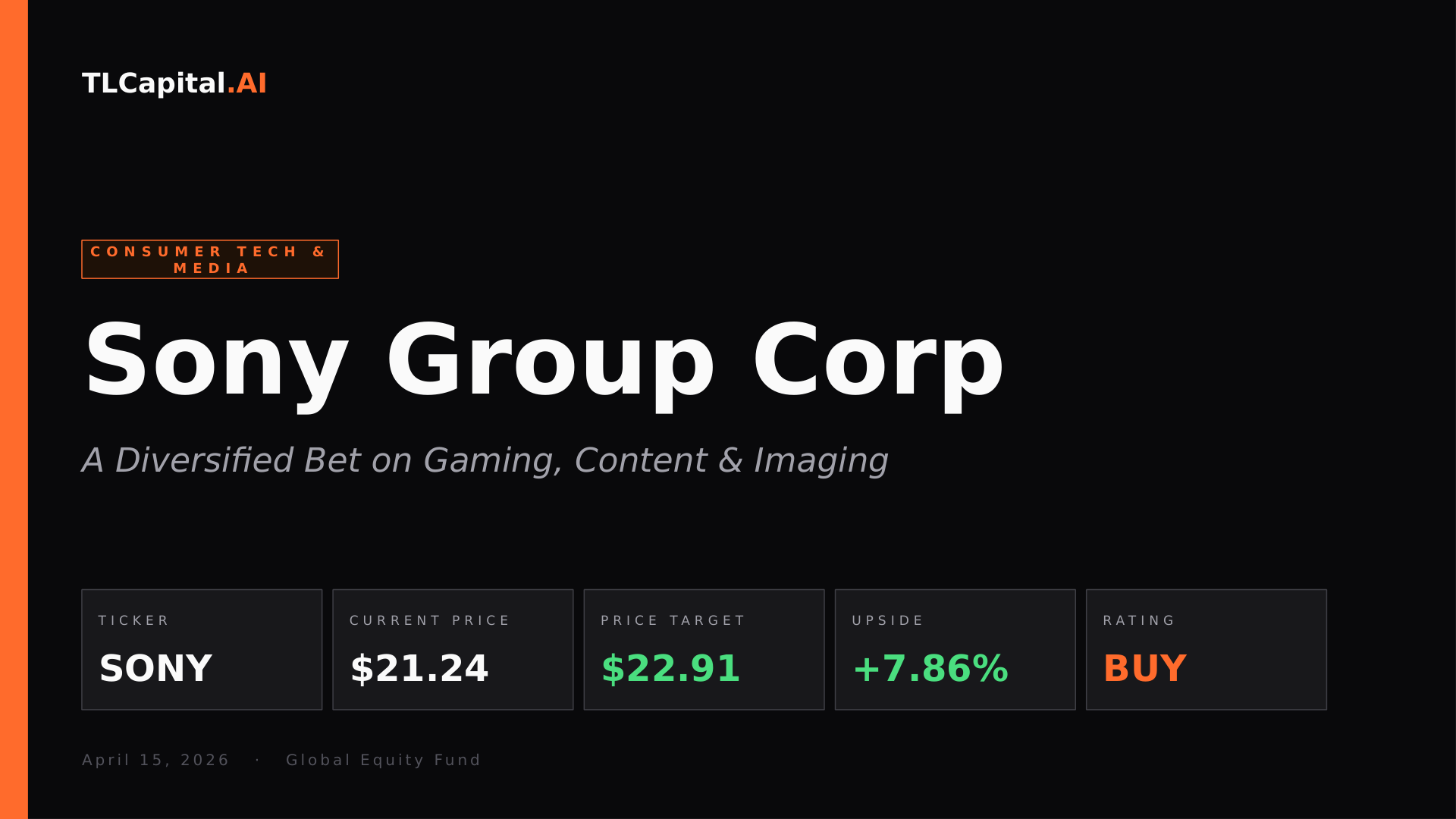
I’m going to do something a little different with this one. Back in April I valued Sony, and it was my first real attempt at a sum-of-the-parts analysis. I’ll be honest: I found it hard, and I think my ~$40 number is probably wrong. I’m posting it anyway, because the point here is the learning, not the price target.
What I built
The thesis was that Sony is a high-quality conglomerate worth more in pieces than as a whole: a gaming franchise with a huge installed base, a high-margin music business, an imaging and sensor arm levered to AI and autos, a movie and anime IP engine, and a financial-services separation that should strip out the conglomerate discount. I ran it three ways, a DCF (base case around $23), trading comps, and the sum-of-the-parts, which came out north of $40. The full build is in the full research deck.
Where the SOTP got hard
Here’s the honest part. Pulling revenue for each segment was the easy bit. What tripped me up was everything downstream: estimating segment-level capex, and working out a separate cost of capital for each business. A music label and a semiconductor and imaging arm do not carry the same risk or capital intensity, so one blended WACC doesn’t cut it, and the segments with much higher capex and much higher WACCs swung the math around far more than I expected. That’s the main reason I’d treat my ~$40 as a rough first draft, not a number to lean on.
Where I stand now
My conviction is honestly lower than it was in April, and it comes down to timing. GTA VI is now locked for November 19, 2026, but it’s launching on the PS5, so I don’t think it forces the console-upgrade cycle some people are counting on. A lot of buyers will be perfectly happy playing it on the hardware they already own. Meanwhile the PS6 looks like it’s slipping, with rumors pushing it toward 2028 on the memory and DRAM crunch. So the gaming catalyst I was leaning on has basically been pushed out. I still think Sony is significantly undervalued here, I’m just no longer sure when the market closes that gap. For now the parts of the story I trust most are the content and IP flywheel (movies, anime, Crunchyroll) and the music and imaging compounders, the steady cash engines that don’t depend on a console launch.
What I’m taking from it
The biggest lesson wasn’t about Sony, it was about SOTP itself: the valuation is only as good as your per-segment assumptions, and capex and cost of capital are where the real judgment lives. Next time I’d build each segment’s WACC and capex from the ground up and sanity-check them before I trust the total. If you’ve done this kind of work and can see where my segment assumptions go wrong, tell me, that’s exactly the feedback I’m after.
Glossary
- SOTP: valuing each business segment separately, then adding them up.
- DCF: valuing a company by its projected future cash flows.
- WACC: the blended rate used to discount a business’s future cash flows, higher for riskier, more capital-hungry businesses.
- CapEx: money a business spends on long-term assets.
- Conglomerate discount: the market valuing a multi-business company below the sum of its parts.
Disclosures
This post is for informational and educational purposes only and reflects my own independent research and opinions. It is not investment advice, nor a recommendation, offer, or solicitation to buy or sell any security. The valuation here is a learning exercise and contains figures I believe are imprecise, including the sum-of-the-parts estimate. I am not a licensed financial advisor, and nothing here is a substitute for professional advice tailored to your situation. All investing carries risk, including the possible loss of principal, so do your own research and consider consulting a qualified financial professional before making any investment decision.
Formatting and layout assisted by AI. All research and analysis by Tyler Leas.
I am long Sony.